


Understanding The NLP Coaching Advantage
NLP coaching typically focuses on helping clients identify and overcome limiting beliefs, develop effective communication and problem-solving skills, and build greater self-awareness and self-confidence. It may also involve techniques such as visualization, reframing, and anchoring to help clients achieve a desired state of mind or behaviour.
Becoming an NLP (Neuro-Linguistic Programming) trained coach can be a valuable step for individuals who are interested in helping others achieve their goals and improve their overall well-being. Some reasons to consider becoming an NLP trained coach include:
- Ability to help clients overcome limiting beliefs and improve their self-awareness: By using NLP models and techniques, coaches can help clients identify and overcome negative thoughts, emotions, and behaviours that may be holding them back. This can help clients build greater self-awareness, self-confidence, and motivation to achieve their goals.
- Enhance communication skills: NLP focuses on understanding and utilizing the connection between language, behaviour, and the brain. By understanding how these elements are interconnected, NLP coaches can help clients to improve their communication skills, which can be beneficial in both personal and professional settings.
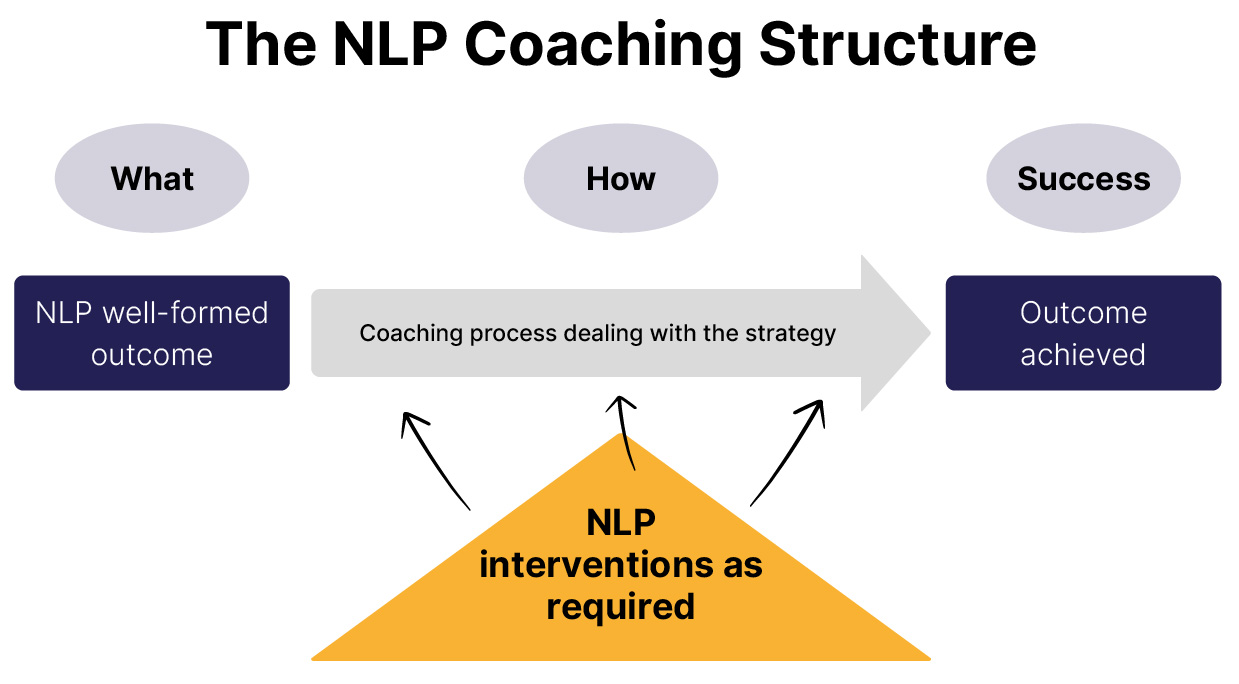
- Help clients achieve specific goals: NLP coaches can help clients to set and achieve their desired goals using the NLP concept of “Well Outcomes” using the SMARTS model as an example – Specific, Measurable, Achievable, Resourced, Time-Framed, Steps (first) by identifying and breaking them down into smaller, actionable steps.
- Offer a structured approach for change: NLP provides a structured approach for understanding and influencing thoughts, behaviours, and communication. This can be useful for clients who are looking for a structured, step-by-step process to achieve their goals.
- Can be used in various areas: NLP coaching can be beneficial for individuals from various areas, such as career development, relationships, personal finance, health and wellness, and personal growth.
- Advancement in career opportunities: Having NLP training that includes a Coaching certification such as the NLP Practitioner & Coach Certification programme offered by UKCPD can make one more attractive to potential clients and open up a wider range of career opportunities in coaching, consulting and training.
It’s important to note that NLP coaching is not a replacement for therapy or treatment for mental health conditions, but it can be used as a powerful tool to improve individuals’ overall well-being, along with achieving their personal and professional goals.
Why is NLP so powerful in enabling change?
NLP is often described as powerful in enabling change because of its focus on understanding and utilizing the connection between language, behaviour, and the brain. By understanding how these elements are interconnected, NLP practitioners are able to help individuals change the way they think and communicate, in order to achieve specific goals and overcome limiting beliefs.
Some of the keyways in which NLP is used to enable change include:
- Helping individuals develop greater self-awareness: NLP focuses on helping individuals understand how their thoughts, emotions, and behaviours are interconnected. By becoming more aware of these connections, individuals can begin to identify patterns in their thinking and behaviour that may be holding them back and take steps to change them.
- Utilizing the power of language: NLP emphasizes the importance of language in shaping thought and behaviour. By using language in specific ways, NLP practitioners can help individuals reframe negative thoughts, develop a more empowering self-talk, and improve communication with others.
- Using visualization and other techniques: NLP practitioners often utilize visualization and other techniques to help individuals achieve specific goals. For example, visualization can be used to help individuals imagine themselves achieving a desired outcome, while other techniques such as reframing, and anchoring can be used to help individuals overcome limiting beliefs and maintain a desired state of mind or behaviour.
- Using specific structured process and techniques to change the neural pathway, change the belief which is stopping you from achieving goals or to overcome phobias.
Overall, NLP is considered to be a powerful tool for enabling change because it provides a structured way of understanding and influencing thought, behaviour, and communication, which can help individuals achieve their goals, overcome limiting beliefs, and improve their overall well-being.
NLP Models Used in Coaching
In NLP coaching, there are several different models and techniques that are used to help clients achieve their goals and overcome limiting beliefs. Some of the most common NLP coaching models or methods include:
- The Meta-Model: This is a set of language patterns that help NLP practitioners to identify and challenge limiting beliefs and generalizations in a client’s language.
- The Milton Model: This is a set of language patterns that are designed to induce a state of trance in the client, in order to help them access their unconscious mind and change limiting beliefs.
- Representational Systems: This model teaches the practitioner to identify the predominate way of communication for the client, whether it is through visual, auditory, kinaesthetic, olfactory, gustatory.
- Reframing: This technique is used to change the meaning of a situation or event, in order to help the client, see it in a more positive light.
- Anchoring: This technique is used to create a positive association with a specific stimulus, such as a word or gesture, in order to help the client, access a desired state of mind or behaviour.
- Submodalities: This model is used to help clients change the intensity and quality of their thoughts and feelings, by identifying and altering the underlying Submodalities, such as the size, location, and movement of the mental image.
- Timeline Work: This technique is used to help clients let go of negative emotions, limiting beliefs and self-sabotaging behaviours by identifying their personal timeline.
These are just a few examples of the many NLP coaching models and techniques that exist. The specific models and techniques used will depend on the client’s goals and the practitioner’s training and expertise.
Discover more by Clicking HERE.

