


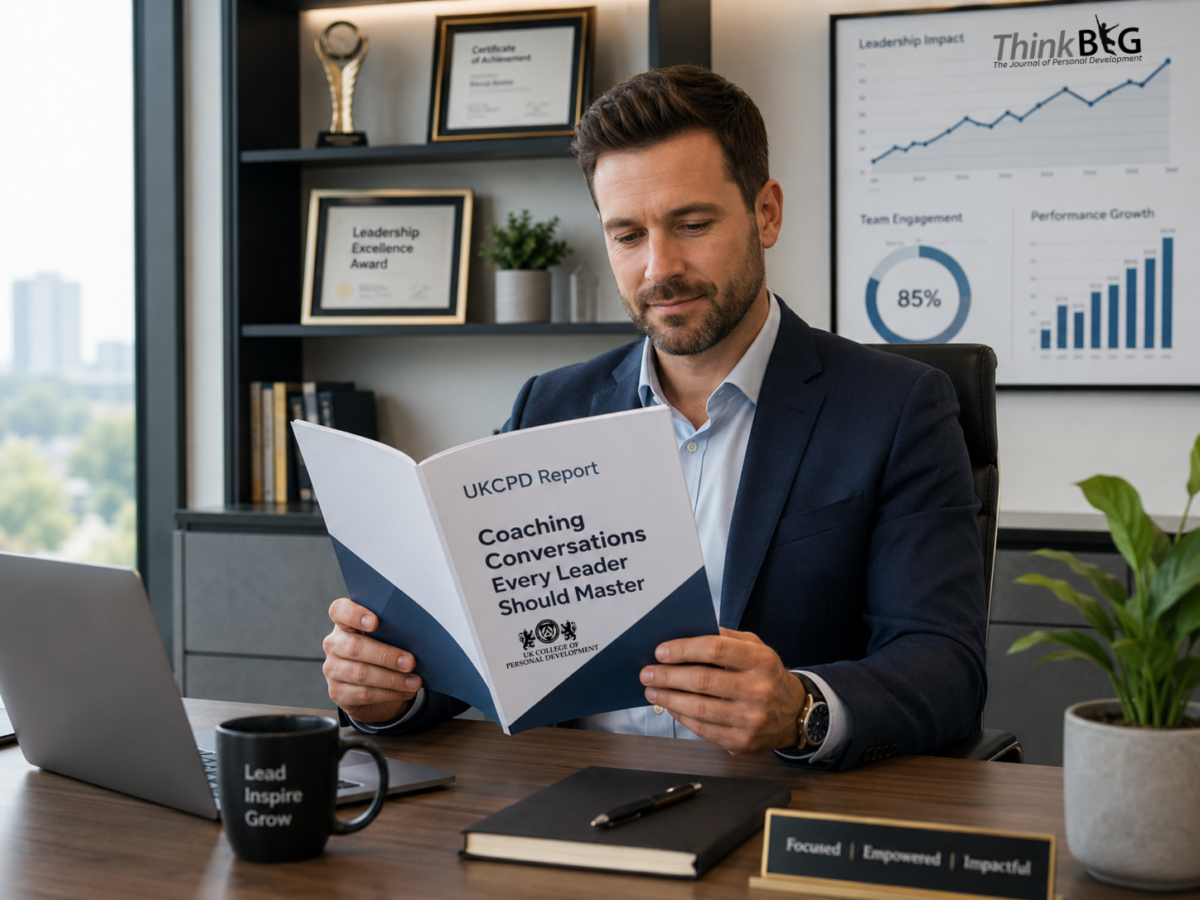
Leadership has changed.
The old model of management was often built around command, control and correction. The manager had the answers. The employee followed the instructions. Progress was measured by compliance, output and whether people did what they were told.
That approach may still have a place in moments of crisis or when clear instruction is essential, but it is no longer enough for the modern workplace.
Today’s organisations need people who can think, adapt, learn, collaborate and take responsibility. Teams are working in more complex environments, often across hybrid settings, with changing priorities and increasing pressure. In this kind of workplace, leaders need more than technical knowledge or positional authority. They need the ability to unlock potential.
This is where coaching conversations become so powerful.
A coaching conversation is not simply a friendly chat. It is a focused, purposeful and developmental conversation that helps another person think more clearly, take ownership, explore options, make decisions and move forward with confidence. At its best, coaching helps people become more capable, more self-aware and more accountable.
The leader does not have to become a full-time professional coach to use coaching skills. However, every leader can benefit from learning how to coach. The ability to listen deeply, ask powerful questions, give useful feedback, support reflection and encourage action is now a core leadership skill.
Research supports this shift. Jones, Woods and Guillaume’s meta-analysis of workplace coaching found that coaching has positive effects on learning and development outcomes in organisations. Grant’s research into coaching skills training also showed that structured coaching training can improve goal-focused coaching skills, with longer spaced learning also associated with improvements in emotional intelligence.
In simple terms, coaching works. And when leaders develop coaching capability properly, they become better equipped to support performance, confidence, development and change.
The difference between managing, leading and coaching
Before exploring the coaching conversations leaders should master, it is helpful to understand the difference between managing, leading and coaching.
Management is often concerned with planning, organising, directing and delivering. It asks: What needs to be done? By when? By whom? To what standard?
Leadership is concerned with direction, purpose, culture and influence. It asks: Where are we going? Why does it matter? How do we inspire people to move with us?
Coaching is concerned with development, awareness and ownership. It asks: What is happening? What do you want to achieve? What options do you have? What will you do next?
A strong leader needs all three.
There are times when a manager must give clear instruction. There are times when a leader must set vision and direction. But there are also many moments when the most powerful thing a leader can do is stop giving answers and start helping someone else think.
This is not weakness. It is not avoiding responsibility. It is a more mature form of leadership.
A coaching leader believes that people are more capable than they sometimes realise. They understand that confidence grows through reflection, action, feedback and learning. They create space for people to solve problems rather than simply waiting to be rescued.
This is why coaching conversations are now so important for managers, senior leaders, directors, HR professionals and anyone responsible for developing others.
1. The goal-setting conversation
One of the most important coaching conversations every leader should master is the goal-setting conversation.
Many workplace problems begin because goals are vague. People are told to “improve communication”, “step up”, “be more proactive” or “take ownership”, but those phrases can mean different things to different people. Coaching brings clarity.
A useful coaching methodology here is the GROW model, often associated with Sir John Whitmore. GROW stands for Goal, Reality, Options and Will. It provides a simple but powerful structure for helping someone move from uncertainty to action.
In a management context, imagine a team member is underperforming on project deadlines. A traditional management response might be:
“You need to get better at meeting deadlines.”
A coaching-based management response might sound like:
“What specifically needs to improve with your project delivery?”
“What would a successful outcome look like over the next four weeks?”
“What is currently getting in the way?”
“What support or changes would help you deliver more consistently?”
“What action will you take first?”
The leader is still managing performance. Expectations are still clear. But the conversation invites reflection, ownership and practical problem-solving.
In a leadership context, goal-setting may be broader and more strategic. A senior leader might use coaching questions with a department head who is shaping a new strategy:
“What impact do you want this strategy to have?”
“How will we know it has worked?”
“What matters most to the people we serve?”
“What would success look like in twelve months?”
“What assumptions are we making?”
This kind of conversation helps leaders move beyond task completion and into purposeful thinking. It connects action to outcomes. It also helps people become more intentional about the work they are doing.
2. The reality-check conversation
The second coaching conversation every leader should master is the reality-check conversation.
This is where the leader helps someone look honestly at the current situation. Not through blame. Not through judgement. But through evidence, reflection and awareness.
In coaching, awareness is essential. People cannot change what they cannot see. A leader who uses coaching skills helps people notice patterns, gaps, strengths, risks and opportunities.
In a management position, this might involve a manager supporting a team member who feels overwhelmed. Instead of immediately offering solutions, the manager might ask:
“What is taking most of your time at the moment?”
“What are the real priorities?”
“What is urgent but not important?”
“What have you already tried?”
“What support have you asked for?”
“What are you avoiding because it feels difficult?”
These questions help the employee step back and see the situation more clearly. The manager may still need to make decisions about workload, priorities or resources, but the coaching approach helps the individual participate in the solution rather than simply receive instructions.
In a leadership position, a reality-check conversation might be used with a senior team facing organisational change:
“What is the current mood across the organisation?”
“What are people not saying openly?”
“Where is resistance coming from?”
“What data do we have?”
“What are we assuming?”
“What would our people need from us to feel informed and supported?”
This is where coaching becomes a leadership tool. It helps leaders move beyond surface-level reporting and into deeper organisational awareness. It encourages honesty, reflection and better judgement.
3. The feedback conversation
Feedback is one of the most important conversations in leadership, but it is also one of the most mishandled.
Poor feedback can feel like criticism. Vague feedback can leave people confused. Delayed feedback can lose its impact. Overly positive feedback can avoid the real issue. Coaching-based feedback is different.
It is clear, respectful, specific and developmental.
A useful model is SBI: Situation, Behaviour, Impact. The leader describes the situation, identifies the behaviour and explains the impact. Then coaching questions are used to help the person reflect and choose their next step.
For example, in a management context:
“In yesterday’s client meeting, when the client asked about the timeline, you gave a very detailed technical answer but did not confirm the delivery date. The impact was that the client seemed uncertain about what would happen next.”
Then the coaching questions:
“How did you feel the meeting went?”
“What did you notice about the client’s response?”
“What would you do differently next time?”
“What support would help you feel more confident in those conversations?”
This is not a telling-off. It is feedback with development built into it.
In a leadership context, feedback may involve more complex behaviour. For example, a senior leader may need to speak to a manager who dominates meetings and unintentionally silences others.
A coaching-based feedback conversation might include:
“What impact do you want to have when you lead the senior team meeting?”
“How do you think others experience your contribution?”
“What do you notice about who speaks and who stays quiet?”
“What might change if you asked more questions before offering your own view?”
This kind of feedback invites self-awareness. It helps the person examine not just what they did, but how their behaviour affects culture, trust and participation.
4. The confidence-building conversation
Many people do not need more instruction. They need more confidence.
Confidence is not arrogance. It is the belief that we can take action, learn, adapt and cope with challenge. Coaching conversations are particularly useful because they help people recognise their strengths, resources and previous successes.
In management, a confidence-building conversation might be used with a new supervisor who is nervous about leading their first team meeting.
The manager might ask:
“What have you already done that has prepared you for this?”
“What strengths do you bring to the meeting?”
“What would make you feel more prepared?”
“What is the first small success you want to aim for?”
“What will you do if the conversation goes off track?”
This helps the person move from anxiety to action.
In leadership, confidence-building may be used during times of organisational uncertainty. A leader might coach a department head who is doubting their ability to lead through change:
“What challenges have you already led people through?”
“What did you learn from those experiences?”
“What do your team need from you right now?”
“What is within your control?”
“What would courageous but calm leadership look like this week?”
This is where coaching connects strongly with emotional intelligence. Leaders who coach well help people regulate emotion, access resourcefulness and act with greater clarity.
5. The problem-solving conversation
Leaders are often rewarded for solving problems. The danger is that they can become the person everyone depends on for answers.
A coaching leader does not remove responsibility from others. They develop it.
In a management position, imagine an employee comes to their manager with a recurring problem:
“I do not know what to do about this customer complaint.”
A non-coaching response might be:
“Send them this reply and copy me in.”
That may solve the immediate issue, but it does not necessarily develop the employee.
A coaching response might be:
“What outcome do we need?”
“What options do you see?”
“What would be the risk of each option?”
“What does our policy say?”
“What would you recommend?”
“What support do you need from me?”
The manager may still guide, advise or approve the final response, but the employee has been encouraged to think.
In a leadership position, problem-solving conversations often relate to strategic issues:
“We are losing good people.”
“Our managers are inconsistent.”
“Our customer experience is not where it needs to be.”
A coaching leader might ask:
“What is the real problem beneath the presenting problem?”
“What patterns are we seeing?”
“What have we tried before?”
“What are we tolerating that we need to address?”
“What would be different if we solved this properly?”
“What first step would create momentum?”
This is coaching methodology used at leadership level. It helps teams think systemically rather than reactively.
6. The accountability conversation
Coaching is not soft. Good coaching builds accountability.
The difference is that accountability is created through ownership, not fear.
In a management context, an accountability conversation may be needed when someone has agreed actions but not followed through. The coaching leader does not ignore this. They address it clearly.
For example:
“We agreed that the report would be completed by Friday. It is now Tuesday and it has not been submitted. What happened?”
“What got in the way?”
“What needs to happen now?”
“What will you do differently to prevent this happening again?”
“What commitment are you making?”
This is supportive, but it is not vague. The standard still matters. The deadline still matters. The coaching approach helps the individual reflect, learn and recommit.
In a leadership context, accountability may involve senior leaders taking responsibility for culture or performance. A coaching conversation in an executive team might include:
“What did we commit to?”
“What have we actually done?”
“Where have we avoided difficult decisions?”
“What message does that send to the organisation?”
“What are we prepared to own?”
“What will we do next, and by when?”
This kind of conversation can be transformational because it removes blame and focuses on responsibility.
7. The career development conversation
A leader who only talks about today’s tasks will struggle to inspire tomorrow’s talent.
Career development conversations are one of the most valuable forms of coaching in the workplace. They show people that they are not simply there to complete work; they are there to grow.
In a management role, a career development conversation might include:
“What kind of work gives you energy?”
“What skills would you like to develop?”
“What role would you like to be ready for in the future?”
“What experience do you need?”
“What opportunities could we create over the next six months?”
“What support would help you grow?”
This helps employees feel seen and valued. It can also improve retention because people are more likely to stay where they can see a future.
In a leadership position, career development conversations may happen at talent, succession or senior leadership level:
“What capability will the organisation need in three years?”
“Who has potential that we have not yet developed?”
“What leadership behaviours do we need to strengthen?”
“How can we create coaching cultures rather than dependency cultures?”
“What development experiences will prepare people for greater responsibility?”
This is where coaching moves beyond individual conversations and becomes part of organisational strategy.
8. The change conversation
Change is now a constant feature of organisational life. New systems, restructuring, market pressures, technology, hybrid working and shifting customer expectations all require people to adapt.
But people do not simply change because they are told to.
A coaching conversation helps people explore the meaning of change, their concerns, their choices and their next steps.
In a management context, this may involve a team member who is resistant to a new process:
“What concerns you most about the change?”
“What do you think might improve if this works?”
“What would help you feel more confident using the new system?”
“What support do you need?”
“What is one step you could take this week?”
The manager is not pretending that the change is optional. They are helping the person engage with it constructively.
In a leadership context, change conversations may be more emotional and cultural:
“What story are people telling themselves about this change?”
“What do they need to hear from us?”
“Where do we need to listen before we act?”
“What are we asking people to let go of?”
“What new identity are we inviting people to step into?”
This is a sophisticated use of coaching methodology. It recognises that change is not only operational. It is psychological.
9. The wellbeing conversation
Modern leaders cannot ignore wellbeing.
This does not mean managers should become therapists. Coaching is not counselling, and leaders must understand the boundaries of their role. However, leaders do need to create safe, supportive conversations where people can talk about workload, pressure, energy and support.
In a management position, a wellbeing conversation might begin with:
“How are you coping with the current workload?”
“What is feeling most pressured?”
“What do you need more of?”
“What do you need less of?”
“What boundaries would help?”
“What support would make the biggest difference?”
The leader listens carefully, looks for practical support and signposts appropriately where needed.
In a leadership position, wellbeing conversations may focus on the system:
“What is our culture rewarding?”
“Are we creating sustainable performance or short-term exhaustion?”
“What are managers modelling?”
“What pressures are we normalising?”
“What would a healthier high-performance culture look like?”
This is where coaching helps leaders move from individual fixes to cultural responsibility.
10. The reflective learning conversation
One of the most powerful coaching conversations is also one of the simplest: the reflective learning conversation.
After a project, meeting, presentation or difficult moment, a leader can help someone learn by asking:
“What happened?”
“What worked well?”
“What did you learn?”
“What would you do differently next time?”
“What will you carry forward?”
This turns experience into development.
In a management context, this may happen after a client call or project milestone. Instead of moving immediately to the next task, the manager pauses to help the employee extract learning.
In a leadership context, reflection can support board-level or senior-team learning:
“What did this quarter teach us?”
“What did we miss?”
“What assumptions proved wrong?”
“What strengths did we demonstrate?”
“What must we now change?”
A learning organisation is not created by training alone. It is created by leaders who turn everyday experience into insight.
The coaching leader: more than a management style
The coaching leader is not someone who avoids decisions or endlessly asks questions. They are someone who understands when to direct, when to support, when to challenge and when to step back.
A coaching leader:
- listens before judging;
- asks before advising;
- develops people rather than creating dependency;
- gives feedback with respect and clarity;
- encourages ownership;
- builds confidence;
- creates psychological safety;
- supports performance and learning;
- understands the importance of ethics and boundaries.
This style of leadership is especially relevant in organisations that want empowered teams. People are far more likely to take responsibility when they are trusted to think. They are more likely to grow when they are supported to reflect. They are more likely to perform when expectations are clear and development is ongoing.
Coaching is therefore not just a “nice” leadership behaviour. It is a practical management and leadership capability.
Why qualified coaching skills make a difference
Many leaders believe they already coach because they are good with people. They listen. They encourage. They give advice. They support their teams.
Those things matter, but professional coaching skills go further.
A recognised coaching qualification helps leaders understand the structure, ethics and methodology of effective coaching. It provides models, practice, feedback and reflection. It helps leaders know the difference between coaching, mentoring, managing, counselling and advising. It also builds confidence in using coaching appropriately.
Grant’s study on coaching skills training is particularly relevant here. The research compared longer-term coaching skills training with shorter, intensive training. Both approaches improved goal-focused coaching skills, but the longer, spaced programme was also associated with improvements in emotional intelligence. This matters because coaching is not just a technique; it is a relational skill. Leaders need self-awareness, empathy, listening ability and emotional discipline.
A coaching qualification can therefore support leaders in several important ways:
First, it gives them a practical framework. Models such as GROW, solution-focused coaching, reflective practice and goal-setting approaches help leaders structure conversations with purpose.
Second, it develops confidence. Leaders often avoid coaching conversations because they are unsure what to ask, how to respond, or how to balance support with challenge. Training gives them a safe environment to practise.
Third, it improves listening and questioning. Many workplace conversations fail because leaders listen to reply rather than listen to understand. Coaching training helps leaders slow down and hear what is really being said.
Fourth, it builds ethical awareness. Coaching requires boundaries, confidentiality, respect and responsibility. A qualification helps leaders understand what coaching is and what it is not.
Fifth, it strengthens professional credibility. For managers, HR professionals, consultants and leaders, a recognised qualification demonstrates that coaching is not just an informal interest but a developed professional capability.
This is why coaching qualifications are increasingly valuable for managers and leaders who want to create stronger conversations, better performance and healthier cultures.
Coaching methodology in management: a practical example
Consider a middle manager leading a customer service team.
One team member, Sarah, has strong technical knowledge but struggles when handling difficult customers. She becomes defensive, gives too much detail and sometimes escalates issues too quickly.
A traditional manager might say:
“You need to stay calm and stop escalating so many calls.”
A coaching manager might use a structured conversation:
Goal:
“What would you like to improve in your customer conversations?”
Reality:
“What tends to happen when a customer becomes frustrated?”
“What do you notice in yourself at that moment?”
Options:
“What could you try instead?”
“What have you seen others do well?”
“What phrase could help you pause before responding?”
Will:
“What will you practise on your next call?”
“When shall we review how it went?”
The manager is still focused on performance, but the employee is now involved in diagnosing the issue and choosing the behaviour change.
That is coaching methodology being used in management.
Coaching methodology in leadership: a practical example
Now consider a senior leader responsible for improving collaboration across departments.
The issue is not one person’s performance. It is a cultural problem. Teams are working in silos, protecting their own priorities and blaming each other when projects stall.
A command-and-control leader might announce a new process and demand better cooperation.
A coaching leader might bring department heads together and ask:
“What is the shared outcome we all need to achieve?”
“What is currently preventing collaboration?”
“What assumptions are we making about each other?”
“What do we each need to take responsibility for?”
“What would trust look like in practical terms?”
“What agreement can we make today that would change the way we work?”
This is coaching used as a leadership methodology. It helps the group develop awareness, ownership and shared commitment. The leader is not simply managing tasks; they are shaping culture.
Building a coaching culture
Individual coaching conversations are powerful, but the greater opportunity is to build a coaching culture.
A coaching culture exists when people throughout the organisation regularly use coaching skills to support learning, ownership and performance. Managers ask better questions. Senior leaders listen more deeply. Teams reflect more honestly. Feedback becomes normal. Development becomes continuous.
In a coaching culture, people do not wait passively for answers. They learn to think, contribute and take responsibility.
This does not mean every conversation becomes a coaching conversation. There will always be times for instruction, decision-making and direction. But it does mean that coaching becomes part of the leadership language of the organisation.
A coaching culture can support:
- stronger management capability;
- improved employee engagement;
- better problem-solving;
- more effective feedback;
- leadership development;
- talent retention;
- greater resilience during change;
- improved confidence and communication.
The key is skill. Coaching culture cannot be built on good intentions alone. Leaders need training, practice and support.
Start with the conversations
Leadership is not only found in strategy documents, performance dashboards or organisational charts. Leadership happens in conversations.
The conversation after a mistake.
The conversation before a promotion.
The conversation when someone is losing confidence.
The conversation when a team is stuck.
The conversation when change feels uncomfortable.
The conversation when performance needs to improve.
The conversation when someone is ready to grow.
These moments matter.
When leaders master coaching conversations, they become more than managers of work. They become developers of people. They help others think more clearly, act more confidently and take greater ownership of their success.
That is the real power of coaching in leadership.
Develop your coaching skills with UKCPD
If you are a manager, leader, HR professional, consultant or aspiring professional coach, developing qualified coaching skills can transform the way you support others.
UKCPD offers a suite of accredited coach training options designed for different stages of your coaching journey.
For those looking to develop life coaching and professional coaching practice, UKCPD’s Association for Coaching qualifications provide a clear pathway from foundation-level coaching through to more advanced life, business performance and NLP-informed coaching routes.
For managers and leaders who want to use coaching in the workplace, UKCPD’s ILM Coaching and Mentoring qualifications provide a recognised professional route. The ILM Level 5 qualifications are particularly suitable for middle managers, workplace coaches, HR professionals and internal coaches. The ILM Level 7 qualifications are designed for senior leaders, executive coaches, consultants and those working at a more strategic level.
UKCPD has been delivering accredited coaching, NLP and leadership training since 1998. For potential students, that provides confidence that they are choosing an experienced provider with a strong track record, recognised qualifications and a supportive learning experience.
Whether your goal is to become a professional coach, develop a coaching practice, improve your leadership style or bring coaching conversations into your organisation, UKCPD can help you take the next step.
The future of leadership is not command and control.
It is clarity, trust, challenge, support and growth.
It is coaching.
References
Association for Coaching.
Grant, A. M. (2007). Enhancing coaching skills and emotional intelligence through training. Industrial and Commercial Training, 39(5), 257–266.
Jones, R. J., Woods, S. A. and Guillaume, Y. R. F. (2016). The effectiveness of workplace coaching: A meta-analysis of learning and performance outcomes from coaching. Journal of Occupational and Organizational Psychology, 89(2), 249–277.
Whitmore, J. (2017). Coaching for Performance: The Principles and Practice of Coaching and Leadership. 5th ed. London: Nicholas Brealey Publishing.
UK College of Personal Development. (2026). AC Accredited Courses and Life Coaching Qualifications.
UK College of Personal Development. (2026). ILM Coaching and Mentoring Qualifications.

