


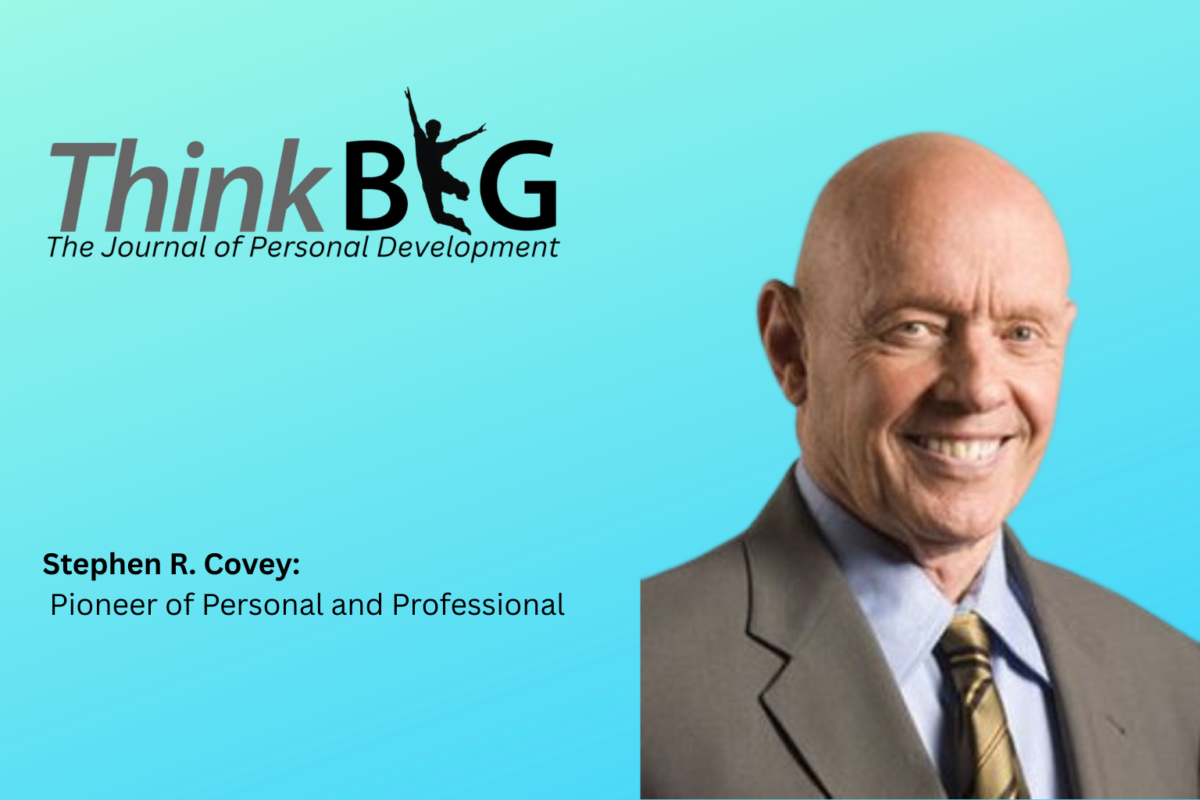
Stephen R. Covey — Pioneer of Personal and Professional Development
Stephen Richards Covey (October 24, 1932 – July 16, 2012) was a renowned American educator, author, businessman, and thought leader whose work fundamentally shaped modern approaches to personal effectiveness, leadership, and organisational culture. His influence extends across professional development, executive education, coaching, and leadership curricula worldwide.
Early Life, Education, and Career
Born in Salt Lake City, Utah, Covey earned a Bachelor of Science in Business Administration from the University of Utah, an MBA from Harvard University, and a Doctor of Religious Education (DRE) from Brigham Young University. His academic grounding in both business and human values uniquely positioned him to explore the intersection between character, principle-centered living, and organisational performance.
Covey began his career as a professor at Brigham Young University’s Marriott School of Management, where he taught organisational behaviour and business management. He later founded Covey Leadership Center, which became part of FranklinCovey Co., a global professional services firm delivering training and consulting in leadership, execution, trust, and productivity.
The 7 Habits of Highly Effective People — A Landmark Work
Covey’s most influential contribution to personal and professional development is his best-selling book The 7 Habits of Highly Effective People (1989). The work has sold millions of copies in dozens of languages and is widely regarded as a foundational text in self-improvement and leadership literature.
Rather than promoting quick fixes or personality-based success formulas, Covey anchored his philosophy in principle-centred living, arguing that true effectiveness arises from aligning behaviour with universal, timeless principles such as integrity, responsibility, fairness, and human dignity.
The seven habits he outlined chart a progression from personal mastery to interdependent leadership:
- Be Proactive — Taking responsibility for one’s choices and actions rather than reacting to external circumstances.
- Begin with the End in Mind — Clarifying one’s life or organisational vision and defining meaningful goals.
- Put First Things First — Practising disciplined time and priority management focused on high-value activities.
- Think Win-Win — Seeking mutually beneficial outcomes in relationships and negotiations.
- Seek First to Understand, Then to Be Understood — Prioritising empathetic listening as a foundation for communication and influence.
- Synergise — Valuing diversity of thought and collaboration to achieve results greater than the sum of individual effort.
- Sharpen the Saw — Committing to continuous renewal of body, mind, heart, and spirit.
This integrative framework moved beyond traditional productivity models by emphasising character development, ethical decision-making, and interdependence — concepts that have become staples in coaching, HR, leadership training, and organisational culture initiatives.
Broader Contributions and Legacy
Covey authored and co-authored numerous books expanding on leadership, time management, trust, and organisational change, including Principle-Centered Leadership, First Things First (with A. Roger Merrill and Rebecca R. Merrill), and The 8th Habit: From Effectiveness to Greatness. Each built on the notion that sustainable success depends on aligning personal values with professional roles.
Through FranklinCovey, Covey’s frameworks have been operationalised into training programs used by corporations, governments, and educational institutions around the world. His work contributed to the professional development field by:
- Systematising leadership principles that are teachable, scalable, and measurable.
- Bridging personal and organisational effectiveness, showing that self-mastery underpins leadership outcomes.
- Influencing coaching, mentoring, and HR practices by embedding emotional intelligence, ethical behaviour, and interpersonal effectiveness into professional standards.
Philosophical Impact
Covey’s integration of timeless principles with practical tools elevated the conversation about success from short-term achievement to long-term character and contribution. By advocating that effectiveness is rooted in integrity, fairness, and service, he shifted personal development from self-interest to shared value — an orientation that resonates deeply in contemporary leadership and organisational development discourse.
Today, Stephen Covey’s work continues to inform leadership curricula, coaching competencies, executive development standards, and individual growth practices worldwide. His legacy endures not only in the frameworks he popularised but also in the countless professionals and organisations that apply his principles to create meaningful and sustained impact.

